Explain everyday access
Include vehicle position, doors and the paths people use. Ask how a location would be assessed in that setting.

FIELD GUIDE / 03 / PARKING & CHARGING
The space matters as much as the vehicle. Explore the questions behind private, shared and street parking.
Explore three situations ↓Include vehicle position, doors and the paths people use. Ask how a location would be assessed in that setting.
Bring management and use of the space into the discussion before choosing equipment.
Describe the usual area and parking uncertainty. Do not assume a property-based charging arrangement is possible.
Start with where the vehicle normally rests. That may be a driveway, garage, allocated bay, shared car park or a changing street space. Explain whether the arrangement is consistent or varies across the week. Do not assume the parking space nearest the property is available for a charging project.
Record who owns or manages the space if you know. If responsibilities are unclear, put that at the top of the questions list. The parking diagram here is an aid to describing situations, not a site plan or an installation recommendation.
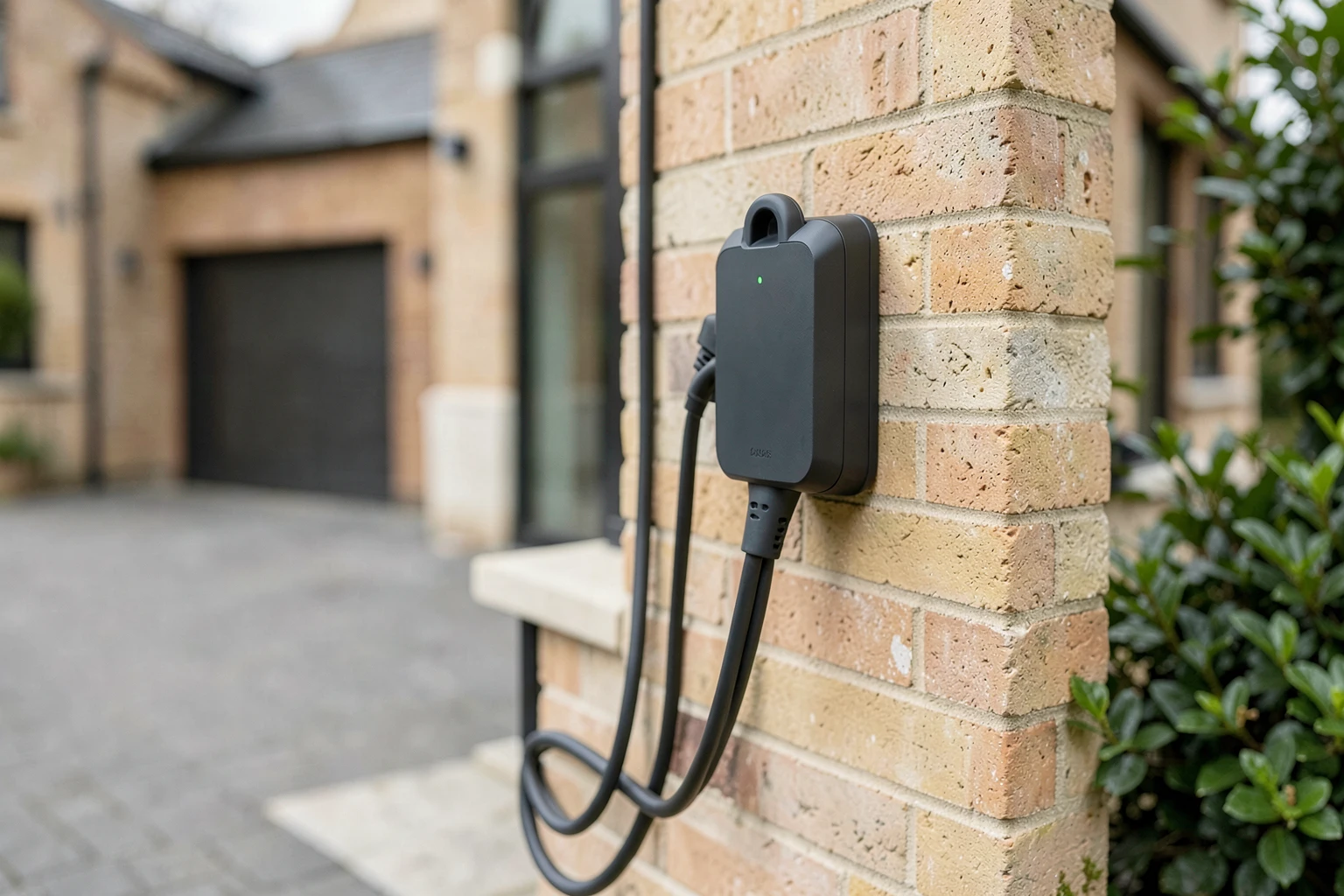
For a driveway or garage, describe how the vehicle is positioned and how people move around it. Mention gates, doors, storage or access that must remain usable. Existing photographs taken from ordinary accessible positions may help explain the setting.
Do not choose cable routes or equipment positions from a general guide. Location and electrical requirements need assessment in the actual property context. The useful first step is to show how the space works day to day and ask what further information is needed.
Allocated parking and communal parking are not necessarily the same arrangement. Describe whether the bay is fixed, whether other people use it and who manages the wider area. Record the contact or organisation responsible for discussing changes if that is known.
Ask which agreements and responsibilities need to be established before a proposal develops. Keep the answer open until the relevant parties have confirmed it. This guide cannot determine parking rights, permission to carry out works or an individual location’s suitability.
If the vehicle parks on the street, say whether it usually stays in the same area or depends on availability. Explain the setting without assuming that a connection from the property is possible. Ask about the options relevant to your circumstances before treating home charging as a settled plan.
The aim is to identify the right questions, not to suggest an improvised solution. A clearer description of the parking situation helps avoid discussing equipment that may not fit the way the vehicle is actually used.
Bring the parking information together with typical arrival and departure times, the vehicle involved and any changes expected. For more than one driver or vehicle, note where needs overlap. Mark unknown details rather than estimating technical requirements.
A useful enquiry might explain the space, who controls it, the usual routine and the main concern. Ask what assessment and information would be needed to discuss a suitable scope. The home charging page helps connect these observations to a first conversation with BRH.
KEEP THIS IN YOUR PROJECT NOTES
Describe gates, doors, paths and shared access. Include how people move around the parked vehicle and who needs to use the same space.
A parking space may be used by someone who does not own or manage it. Establish who can discuss changes and which questions need their involvement before assuming work can proceed.
Note when vehicles arrive, how long they usually stay and whether routines overlap. Keep the conversation tied to actual use rather than selecting equipment from a picture.